Latest Reviews

I never thought I'd spend $450 on a pair of headphones, but Sony proved me wrong.
Sony's WH-1000XM6 deliver everything I wanted in a pair of headphones. A rich soundstage, excellent design, long battery life, and dual Bluetooth connectivity.

The Asus ROG Strix G18 is proof that paying more for an RTX 5090 is a waste of money
With an 18-inch display and top-tier performance, the Strix G18 delivers an impressive gaming experience that's competitive with pricier RTX 5090 rivals.

The HP OmniBook 5 Laptop AI lures you in with an affordable big screen, but it may be a trap.
The HP OmniBook 5 Laptop AI is affordably priced with some minor strengths, but flaws like its dull, dim display and lackluster performance overshadow them.

I played the Nintendo Switch 2 for one week and I desperately want it, but not all of it
Playing Mario Kart World on the Nintendo Switch 2 with my daughter might’ve sold me on it, but after one week, it’s still missing one thing

I used the Asus ROG Strix G16 for a week, and it may be the best value in gaming laptops right now
The Asus ROG Strix G16 features strong performance, solid Nvidia RTX 5070Ti graphics, a bouncy keyboard, plenty of ports, and a bright, vibrant IPS display.
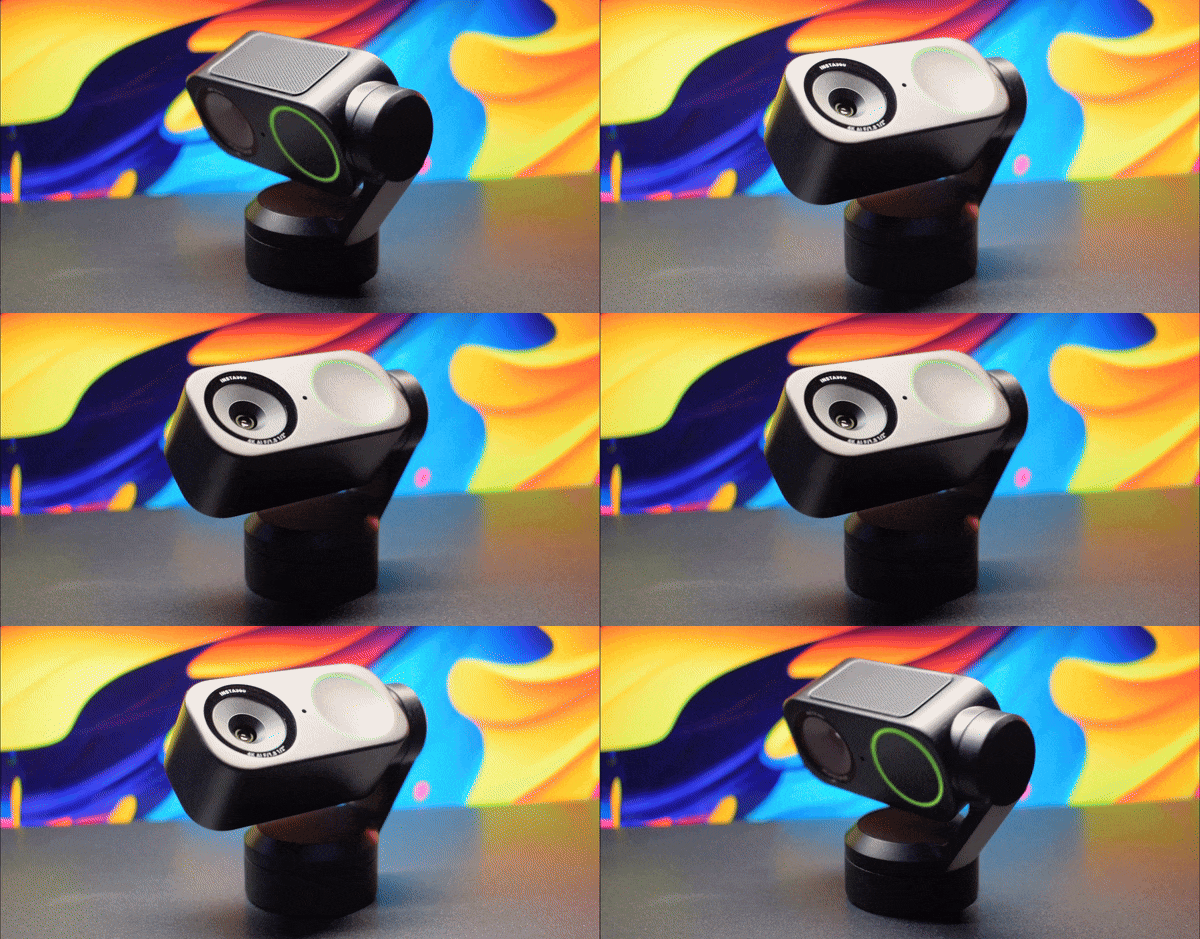
Insta360 Link 2 review: A near-perfect webcam with a twist
Everything that made one of the best 4K webcams in recent years great at $100 less? The Insta360 Link 2 is less of a gamble and more of a guarantee of satisfaction.

Garmin Instinct 2 Solar review: A rugged, long-lasting beast of a smartwatch
Spend 3 hours per day in full sunlight for "unlimited" battery life, sorry vampires.

The Lenovo Yoga 7i 2-in-1 16 is nearly great, except for one huge flaw
There's a lot to love about the Lenovo Yoga 7i 2-in-1 16, including surprisingly strong graphics performance and audio quality, but a seriously lackluster display holds it back from being great.

This MSI Raider gaming laptop costs more than my rent, but it’s worth every penny
The MSI Raider 18 HX AI features strong performance, smooth RTX 5080 graphics, a vivid miniLED display, a bouncy keyboard, powerful audio, and plenty of ports.

The Alienware 16 Area-51 is one of the cheapest RTX 5080 gaming laptops — and it’s near-perfect
The Alienware 16 Area-51 is a whole lot of gaming laptop for a competitive price, wrapped up in a badass design, stuffed with powerful hardware, and featuring a sick mechanical keyboard.