Laptop Mag Verdict
One of our favorite mini-notebooks receives the Windows XP makeover.
Pros
- +
Nearly full-size keyboard
- +
Sharp display
- +
Durable design
- +
Good battery life
Cons
- -
Pricey
- -
Awkwardly placed mouse buttons
Why you can trust Laptop Mag Our expert reviewers spend hours testing and comparing products and services so you can choose the best for you. Find out more about how we test.
When we first reviewed theVista version of the HP 2133 Mini-Note, we praised the system for its excellent keyboard, crisp display, sturdy build, and wealth of connectivity options. Now we've gotten our hands on the XP configuration, and although it provides roughly the same user experience, it's a welcome addition for those who want the familiarity and snappier performance of XP. The Mini-Note ($729 as configured) is a bit more expensive andweighs more than competing mini-notebooks, but the system's unique strengths make it a good investment for students, mobile professionals, and anyone else looking for an affordable, highly portable computer.
Design
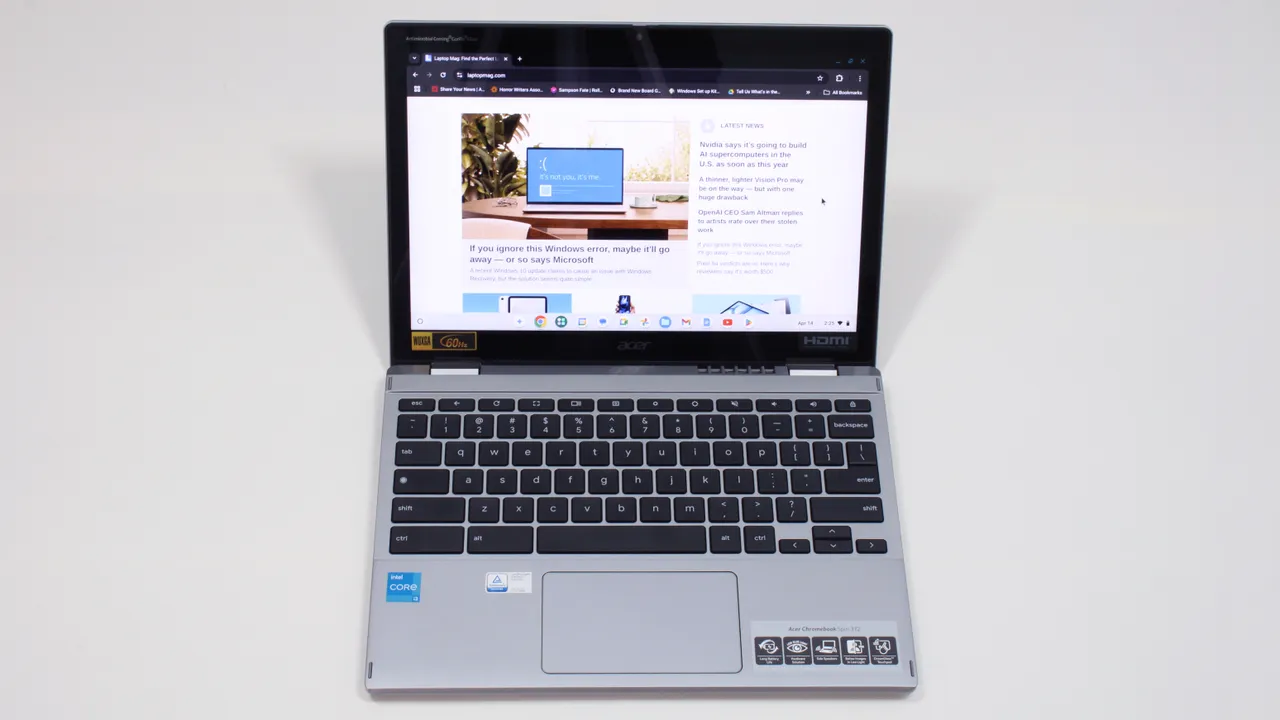
As with other mini-notebooks, such as theCTL 2go PC, the Mini-Note is nominally aimed at the education market, but it looks far more grown-up than other notebooks in its class. Measuring 10.0 x 6.5 x 1.1 inches and weighing only 3.2 pounds, the Mini-Note is a tad bulkier than its competitors but makes up for it with an attractive brushed silver aluminum case over a magnesium-alloy chassis, giving the system a durable foundation.
Beneath the lid is a bright 8.9-inch display framed by a shiny black bezel. We didn't experience any window-sizing problems as we have with other mini-notebooks, thanks to the screen's 1280 x 768-pixel resolution; we enjoyed browsing our favorite Web sites as we would on a larger notebook. Colors were vibrant, and the viewing angles were quite good, but users with weak eyes may find text and icons too small.
Despite its compact dimensions, the Mini-Note features a 92 percent--size keyboard treated with a special coating that HP claims makes the keys 50 times more resistant to visible wear than a standard keyboard, and it's spill-resistant. We loved the springy, responsive keys--easily the best of all mini-notebooks--and the wide-aspect touchpad. Unfortunately, the mouse buttons are flanked to the left and right of the touchpad and are oriented vertically, which was awkward. Double-tapping the touchpad was far simpler than acclimating ourselves to the mouse button positioning.
Loading Up on Features
Along the perimeter of the machine is a power switch, drive indicator, Wi-Fi toggle, Ethernet, VGA, headphone and microphone jacks, two USB 2.0 ports, and ExpressCard/54 and SD Card slots. Unlike competing systems, such as theASUS Eee PCandEverex CloudBook, you can configure the Mini-Note with your choice of processors, RAM, and hard drives. Plus, you can plug in an ExpressCard mobile broadband modem, so you don't have to rely on Wi-Fi hotspots, which makes the HP Mini-Note attractive to business customers. (Sure, you can plug a USB modem into other mini-notebooks, but they protrude from the side of the system more, making them easier to accidentally dislodge or break.)
Sign up to receive The Snapshot, a free special dispatch from Laptop Mag, in your inbox.
Positioned above the display is a camera and microphone embedded in the upper bezel. The HP Mini-Note doesn't come with a webcam utility, but Meebo immediately recognized the camera, which provided adequate image quality for video chatting. The built-in stereo speakers were surprisingly loud, but as with the majority of notebooks in this class, they lacked sufficient low-end punch.
Our Mini-Note came with Windows XP Professional installed on a 5,400-rpm 120GB hard drive (which is protected by an accelerometer); you can configure the system with Vista Business, Vista Home Basic, FreeDOS, or the SUSE Linux Enterprise Desktop 10 operating system. HP offers several drive choices as well, including a 4GB solid state drive for the Linux version (starting at $499), and 120GB and 160GB drives that spin at 5,400 rpm. These latter configurations start at $599.
System Performance
The Mini-Note is powered by a 1.2-GHz VIA C7-M processor and 1GB of RAM and produced a PCMark05 score of 1,006, which isn't blazing but is more than 200 points better than the 2go PC's 780 score. Still, we had no problems streaming Hulu and YouTube videos. The VIA Chrome 9 graphics chip helped the Mini-Note achieve a 3DMark03 score of 477, which is slightly better than the 380 score seen on the Vista version. It's still on the low side, but the Mini-Note had no trouble handling XP, running Meebo, and streaming Slacker Internet radio as we checked e-mail and worked in Google Docs. It did take 54 seconds for the OS to boot, but that's a solid improvement over the 1 minute and 18 seconds needed for Vista load.
Battery Life and Wireless
While surfing the Web with the LCD's brightness at maximum, streaming music from Slacker, and checking e-mail, the HP Mini-Note lasted a weak 1 hour and 23 minutes on a charge. With screen brightness at 50 percent, we saw 3 hours and 58 minutes of endurance, which is about as good as it gets (so far) for this category. We should note that this battery life was achieved with an extended-life six-cell battery, which adds 0.4 pounds to the weight and a little girth to the bottom of the system.
The HP Mini-Note demonstrated above-average wireless performance. The machine pushed data along at a rate of 16.7 Mbps at a distance of 15 feet from our access point (up from 14.3 Mbps). From 50 feet away, the 802.11a/b/g radio managed speeds of 10.6 Mbps, which is a slight drop from the 13.2-Mbps mark seen on the Vista version of the Mini-Note.
Verdict
While it's somewhat bigger and pricier than other mini-notebooks, the HP 2133 Mini-Note offers a few features that the others don't, including an adult-size keyboard and a design more suited for road warriors. Ifall you needis a low-cost laptop that can run Windows, you may want to opt for the 9-inch Eee PC, which costs $549. But if you require more from your mini-notebook--such as Bluetooth 2.0 and an ExpressCard slot--and don't mind paying for it, the XP version of the HP Mini-Note is an excellent choice.
HP 2133 Mini-Note (XP) Specs
| Bluetooth | Bluetooth 2.0 |
| Brand | HP |
| CPU | 1.2-GHz VIA C7-M |
| Card Slots | SD memory reader |
| Company Website | www.hp.com |
| Display Size | 8.9 |
| Graphics Card | VIA Chrome 9/128MB |
| Hard Drive Size | 120GB |
| Hard Drive Speed | 5,400rpm |
| Hard Drive Type | SATA Hard Drive |
| Native Resolution | 1280x768 |
| Operating System | MS Windows XP Pro |
| RAM | 1GB |
| RAM Upgradable to | 2GB |
| Size | 10.0 x 6.5 x 1.1 inches |
| USB Ports | 2 |
| Video Memory | 128MB |
| Warranty/Support | One-year parts and labor/24/7 toll-free phone |
| Weight | 3.2 pounds |
| Wi-Fi | 802.11a/b/g |
Jeffrey is a writer at Laptop Mag. His coverage includes chiefly laptop reviews, and he's tried some of the top brands out there, including Acer, Lenovo, MSI, Dell, and Sony. Outside of digging into laptop performance and features, Jeffrey covers things like peripherals and software.